2026-08-17 · Kalei Akina
Hoarding Cleanup in Hawaii: When Does a Home Become a Biohazard?
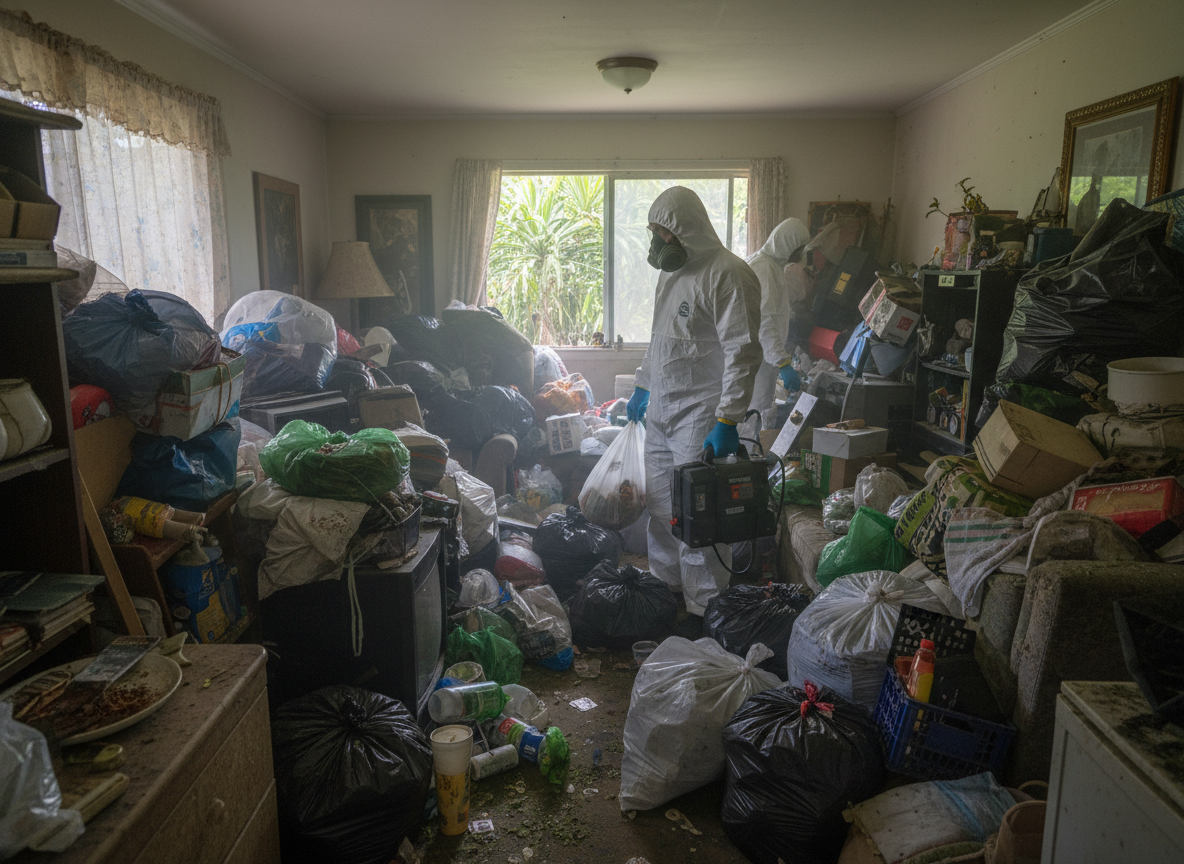
A home in Hilo becomes a biohazard when hoarding reaches severe levels with accumulated human waste, animal feces, or mold growth that has persisted for 12-18 months, often triggered by the area's tropical rainforest climate with frequent rain and mild temperatures. This threshold appears once clutter blocks exits, attracts rodents, or allows standing water to foster bacteria near landmarks like Hilo Bay or Liliuokalani Gardens.
Recognizing Biohazard Levels in Hoarded Homes
Hoarding progresses through five standard levels, but biohazard status typically starts at Level 4 when hallways narrow to less than 2 feet and rooms contain visible feces or urine pools. In Downtown Hilo or Waiakea neighborhoods, residents may notice 40-gallon containers overflowing with decaying matter after 8-12 years of unchecked accumulation. Level 5 involves structural damage such as rotted floors from constant moisture, requiring immediate isolation of affected zones. Professionals evaluate using the Clutter Image Rating scale combined with on-site testing for pathogens. Early signs include strong ammonia odors and pest trails that spread to adjacent properties near Rainbow Falls. These indicators demand documented assessment rather than self-cleaning attempts.
Health Risks Amplified by Hilo's Climate
Hawaii's tropical conditions accelerate mold growth within 48-72 hours on damp paper and fabric piles, turning ordinary clutter into respiratory hazards. Homes in Puueo often see faster bacterial spread due to year-round humidity above 70 percent. Exposure to these environments raises risks of infections from E. coli in feces or hantavirus from rodent droppings. Long-term residents face chronic issues like asthma flares or skin irritations after repeated contact. Biohazard cleanup teams test air quality and surface samples to confirm contamination depth before any removal begins. Without prompt action, these risks extend to family members and neighbors through shared ventilation systems.
Steps to Assess and Address the Situation
Start by documenting room-by-room conditions with photos and notes on waste types present. Next, identify blocked exits and any 2-foot or greater debris depths that prevent normal movement. Contact local health departments in Hawaii County for guidance on reportable conditions involving animal hoarding. Wear full PPE including respirators rated N95 or higher during initial walkthroughs. Sort items into keep, discard, and hazardous categories while isolating biohazard zones. For properties near landmarks like Liliuokalani Gardens, coordinate with neighbors to prevent cross-contamination. These steps prepare the site for licensed remediation without spreading contaminants further into the home.
When Professional Intervention Becomes Necessary
Once mold covers more than 10 square feet or waste includes blood and bodily fluids, licensed teams must handle removal to avoid liability. Our team holds license HI-BIO-2026-XXXXX and operates from 421 Kalanikoa St, Hilo, HI 96720 with hours Mon–Sat 8am–6pm and emergency 24x7 response. Hoarding cleanup specialists use HEPA filtration and EPA-approved disinfectants to restore safe living conditions. Readers facing similar situations in Hilo can review Blood Cleanup in Hawaii: Why Professional Biohazard Remediation Is Important for additional context on pathogen protocols. Delaying service often increases remediation costs from $2,500 to $8,000 or more depending on square footage affected.