2026-08-17 · Kalei Akina
What to Do After a Death in Your Hawaii Home: A Complete Cleanup Guide
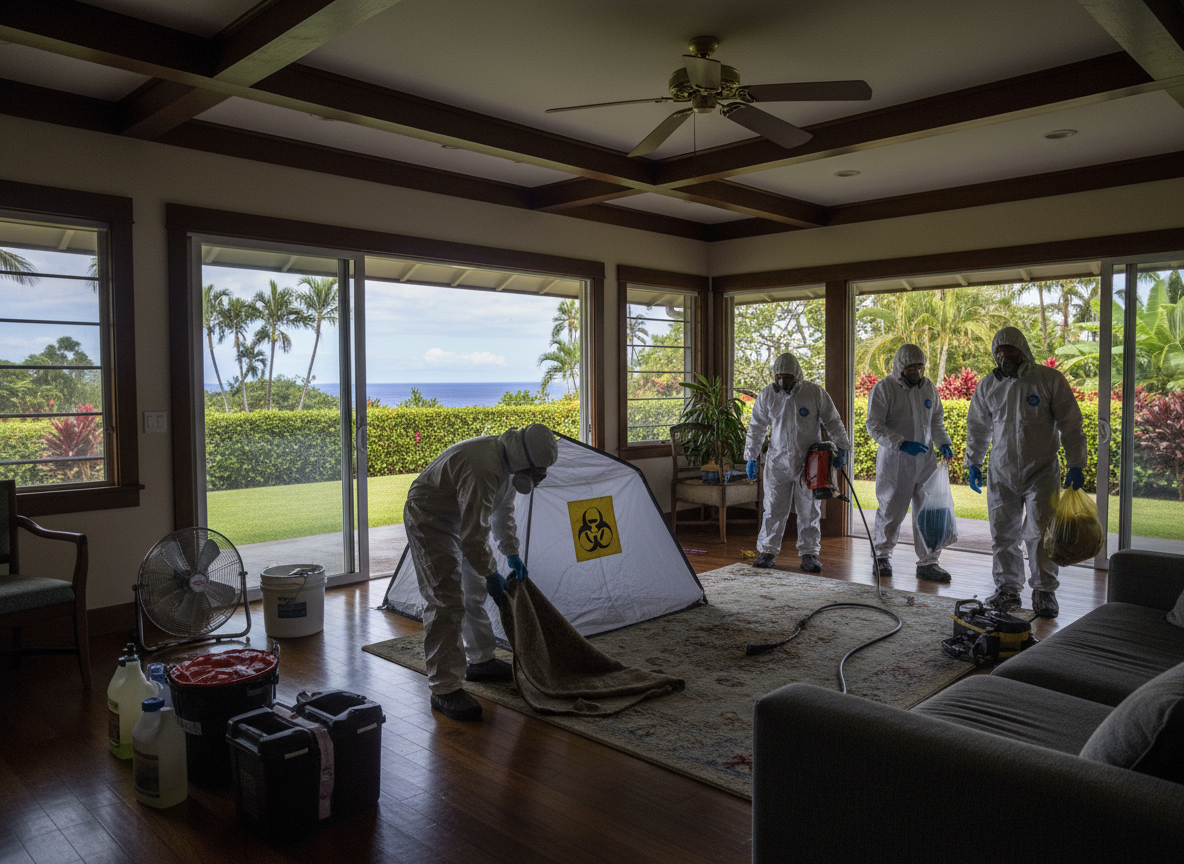
When a death occurs in your Hawaii home, the first actions are to contact emergency services or the medical examiner immediately, avoid disturbing the scene, and arrange for licensed biohazard cleanup within 24 to 48 hours to prevent further contamination. This timeline accounts for rapid decomposition in Hilo's tropical rainforest climate with frequent rain and mild temperatures, which accelerates bacterial growth and odor spread across properties in neighborhoods like Downtown Hilo or Waiakea.
Securing the Scene and Initial Notifications
Secure the property by restricting access to the affected room or area until professionals arrive. Notify the Hawaii County medical examiner or local law enforcement, as they will determine if an investigation is required before any cleanup begins. In cases involving unattended deaths near landmarks such as Rainbow Falls or Hilo Bay, family members should also reach out to the property owner or estate executor to coordinate access. Document the scene with photos only if authorities permit it, and avoid using household cleaners that can spread pathogens. These steps protect everyone involved while preserving evidence for any necessary reports. Families in Puueo often find that early coordination with the medical examiner reduces delays in returning the home to use.
Health Risks from Decomposition in Tropical Conditions
Decomposition fluids can penetrate subfloors, drywall, and insulation within days, especially under Hilo's frequent rainfall and consistent warmth that speeds bacterial activity. Bloodborne pathogens, bacteria, and bodily fluids create exposure risks that standard cleaning cannot eliminate. Biohazard cleanup requires PPE, EPA-registered disinfectants, and proper waste disposal to meet Hawaii County health standards. Homeowners who attempt DIY removal often face lingering odors and hidden mold growth that appears weeks later in humid conditions. Professional teams use specialized equipment to detect and treat affected materials down to the structural level.
Professional Biohazard Cleanup Process
A certified team begins with a site assessment to map contamination zones, then removes and disposes of affected porous materials such as carpet, padding, and drywall. Surfaces receive multiple rounds of disinfection followed by odor neutralization using hydroxyl generators or ozone treatments suited to Hawaii's moisture levels. The process typically takes one to three days depending on the size of the affected area and the stage of decomposition. Crews follow strict protocols for transporting waste to approved facilities. Homeowners can review the unattended death cleanup details to understand how these steps apply to local homes. All work complies with the license number HI-BIO-2026-XXXXX requirements.
Legal, Insurance, and Local Requirements
Hawaii law requires proper documentation of biohazard removal for insurance claims and property records. Contact your homeowner's policy provider early, as many cover trauma scene services after a death. The business at 421 Kalanikoa St, Hilo, HI 96720 operates Mon–Sat 8am–6pm with emergency 24x7 availability to meet county response expectations. Keep copies of all disposal manifests and invoices for estate or probate proceedings. Properties in areas like Waiakea may need additional permits if structural repairs follow the cleanup.
Restoring the Home and Preventing Future Issues
After removal, replace treated surfaces and run dehumidifiers to counter Hilo's persistent moisture that can reactivate hidden contaminants. Consider air quality testing before reoccupying the space. Families often schedule follow-up odor checks two weeks post-cleanup to confirm complete remediation. For related guidance on trauma events, review the biohazard cleanup in Hawaii complete guide. This approach ensures the property meets health standards while respecting the emotional weight of the situation.