2026-08-17 · Kalei Akina
Crime Scene Cleanup in Hawaii: Who Is Responsible for Cleaning the Scene?
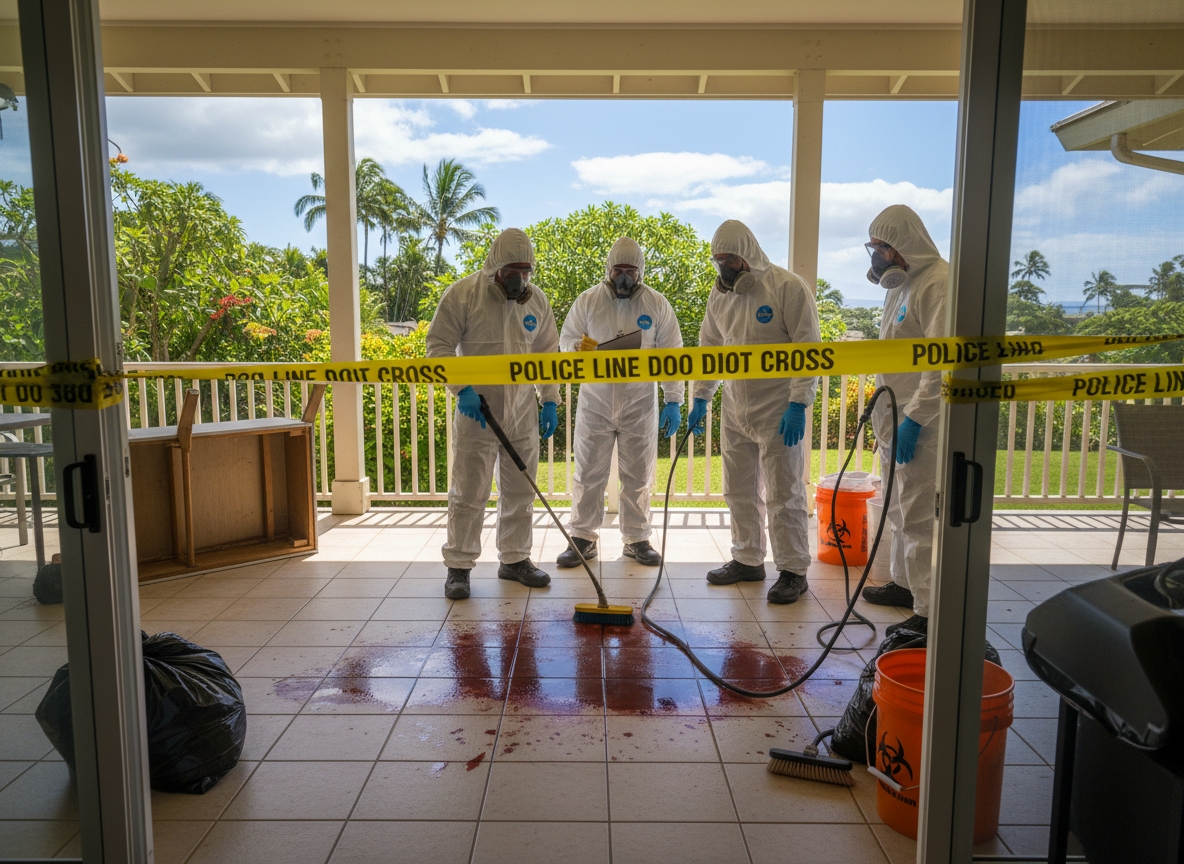
In Hawaii County, including Hilo, the property owner is responsible for crime scene cleanup after law enforcement releases the scene. Police and investigators secure and process the site first, then transfer cleanup duties to the owner or their designated representative. This applies whether the incident occurred in Downtown Hilo, Waiakea, or Puueo. Homeowners typically turn to homeowners insurance or hire licensed specialists to restore the property safely.
Legal Responsibilities in Hawaii
Hawaii law places the burden of post-incident remediation on the property owner once authorities finish their work. No county mandate requires the government to perform the actual cleaning. Owners must address blood, bodily fluids, and other biohazards to meet health codes enforced by Hawaii County. Failure to clean properly can lead to neighbor complaints or future liability if odors or contaminants affect adjacent properties near Hilo Bay or Liliuokalani Gardens. Insurance policies frequently cover these costs when the incident qualifies as a covered event, though deductibles apply. Owners should document everything and contact their carrier immediately after the scene is released.
Role of Law Enforcement and Property Owners
Law enforcement secures the scene, collects evidence, and determines when the area is safe for release. In Hilo, this process can take hours or days depending on the complexity of the case. Once released, the owner must arrange removal of affected materials such as carpet, drywall, and furniture. Professional teams follow OSHA and EPA guidelines for handling potentially infectious materials. Owners who attempt DIY cleaning risk exposure and incomplete decontamination. Coordination between the owner, insurance adjuster, and cleanup crew prevents delays, especially when rain from the tropical climate reaches the property.
Challenges Posed by Hilo's Climate
Hilo's tropical rainforest climate brings frequent rain and mild temperatures that complicate crime scene cleanup. Moisture accelerates bacterial growth and odor development in porous materials left behind. Properties near Rainbow Falls or in Waiakea often require extra drying steps before disinfection can begin. Technicians use industrial dehumidifiers and HEPA air scrubbers to control humidity during the process. Delays from afternoon showers can extend project timelines by one or two days. Owners in Puueo and Downtown Hilo should schedule work during drier morning hours when possible to maintain progress.
When to Contact a Professional Service
Most owners lack the equipment and training needed for safe biohazard remediation. Professional crews arrive with PPE, approved disinfectants, and waste disposal protocols required by Hawaii regulations. They also handle documentation for insurance claims. Contact a service holding license number HI-BIO-2026-XXXXX for work in Hawaii County. Services operate Monday through Saturday from 8am to 6pm with 24x7 emergency response. The team at 421 Kalanikoa St, Hilo, HI 96720 can assess the scene quickly after release. Crime Scene Cleanup teams coordinate directly with owners and adjusters to restore the property.
Practical Next Steps for Homeowners
First, obtain written release from law enforcement before any cleanup begins. Second, notify your insurance company and request a claim number. Third, request a written scope and timeline from the cleanup provider. Biohazard Cleanup specialists can explain which materials must be removed versus those that can be sanitized. Review the related guide on pricing in Hawaii to understand typical ranges. If the incident involves an unattended death, the article on what happens next provides additional context. Keep records of all communications and receipts for reimbursement.